
Hosting a corporate event requires a massive investment of time, energy, and financial resources. You bring together executives, partners, and clients under one roof to communicate your brand message and drive business growth. The physical environment you create sets the tone for your entire organization. A flawless execution reflects competence, attention to detail, and deep professional pride. Conversely, technical failures immediately distract your audience from your core objectives. When the microphones squeal or the screens go dark, attendees stop absorbing your content. They focus entirely on the awkward disruptions happening on stage.
Many organizations focus heavily on catering, floral arrangements, and venue aesthetics while leaving technical details for the last minute. This approach often leads to disastrous consequences on the day of the show. Microphones cut out during critical keynote speeches from your leadership team. Presentation slides fail to sync with the speaker, causing confusion and delays. These disruptions damage your credibility and frustrate your attendees. You need a proactive approach to technology management to protect your brand reputation. Treating event technology planning as an afterthought is a guaranteed path to unnecessary stress and poor audience engagement.
Avoiding these pitfalls requires strategic foresight and a deep understanding of modern production standards. You must integrate your technical requirements into the earliest stages of your planning process. Partnering with experts in corporate event production ensures that every wire, screen, and speaker functions properly. By identifying common technical errors before they happen, you can guarantee a seamless experience for every guest in the room. Careful preparation allows you to control the environment and deliver your message with absolute clarity. Your leadership team deserves a stage where they can present their ideas without worrying about technical malfunctions.
Audio and Visual Oversights
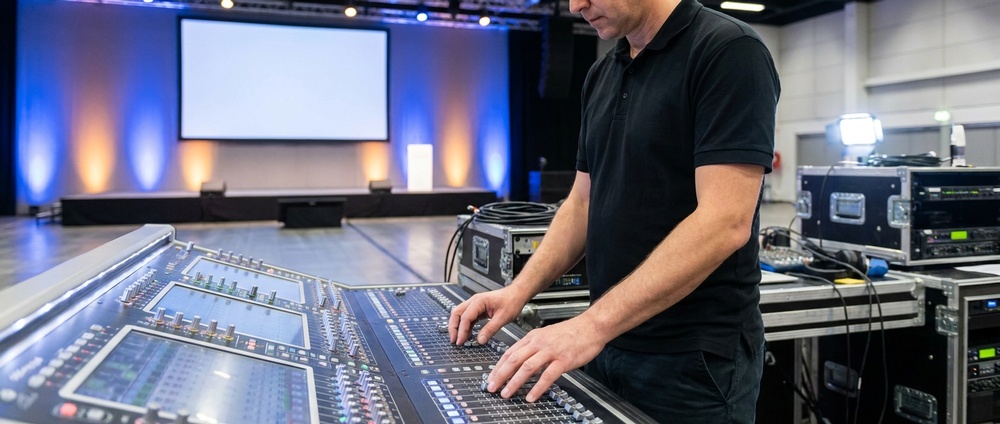
The first major mistake involves underestimating the complexity of professional audio systems in large spaces. You cannot rely on a venue's built in ceiling speakers for a large corporate gathering. These basic systems lack the necessary power, directional control, and clarity to project voices evenly across a crowded room. Your attendees will quickly lose interest if they have to strain to hear the presentations. Investing in proper AV production services guarantees crystal clear sound distribution for every seat in the house. A professional audio engineer will balance the frequencies to eliminate feedback and ensure maximum vocal intelligibility.
The second mistake centers around inadequate lighting design and placement. Many event planners assume standard room lighting will suffice for their stage and their featured presenters. This oversight leaves your keynote speakers in the shadows and makes high quality video recording nearly impossible. Professional stage lighting focuses the audience's attention exactly where you want it. It also creates a dynamic atmosphere that keeps attendees engaged throughout long, complex sessions. Proper illumination separates the presenters from the background and adds a layer of polish to the entire production.
Relying on amateur equipment is another facet of these audio and visual errors. Consumer grade projectors and screens completely wash out under bright venue lights. Your complex data charts, brand graphics, and high resolution videos will look muddy and unprofessional on inferior displays. You need commercial grade display technology to ensure your visual content pops with vibrant colors and sharp contrast. High lumen projectors and modular LED video walls provide the brightness required to combat ambient room lighting.
Correcting these oversights requires a comprehensive site survey long before the event begins. A skilled production team will measure the room dimensions and assess the specific acoustic properties of the space. They will then specify the exact audio arrays and lighting fixtures needed for that specific environment. This calculated approach prevents embarrassing technical failures and ensures your message resonates clearly. Planning your audiovisual needs with precision demonstrates respect for your audience's time and attention.
Ignoring Venue Infrastructure Constraints
The third costly mistake is failing to verify the venue's electrical capacity during the initial contracting phase. Modern corporate events require an immense amount of power to run LED walls, moving lighting rigs, and heavy broadcast equipment. Standard wall outlets simply cannot handle this heavy electrical load without posing a severe fire hazard. Tripping a circuit breaker in the middle of a CEO's presentation brings the entire event to a grinding, embarrassing halt. You must work closely with venue engineers to secure dedicated, high amperage power drops for your production team.
The fourth mistake involves inadequate internet bandwidth for live streaming and attendee usage. Venues often promise high speed wireless internet in their marketing brochures, but these networks quickly crash when hundreds of guests log on simultaneously. If your event includes a virtual component, a dropped connection ruins the experience for your remote audience. You cannot leave your internet connectivity to chance or rely on shared public networks. A stable connection forms the backbone of modern interactive events.
To solve this critical bandwidth issue, you must order a dedicated, hardwired internet line specifically for your broadcast team. This private connection isolates your live stream data from the public Wi-Fi network used by your attendees. You should also request historical network traffic reports from the venue to verify their actual upload and download speeds. Testing these connections weeks in advance gives you time to order supplemental network services or microwave internet links if necessary.
Venue infrastructure also includes physical rigging points and structural weight limits in the ceiling. Hanging heavy lighting trusses, projectors, and line array speakers requires certified rigging professionals and approved structural supports. Ignoring these safety requirements puts your attendees at risk and violates local building codes. You must review the venue's structural blueprints with your production partners to plan safe and effective equipment placement. Proper rigging ensures all equipment stays securely suspended above the audience without compromising the aesthetic design of the room.
Fragmented Event Technology Planning
The fifth mistake occurs when organizations treat different technical elements as isolated silos rather than a unified system. You might hire one vendor for lighting, another for video recording, and a third for the custom event application. This fragmented approach creates massive communication gaps and logistical nightmares during the load in process. When systems fail to integrate properly, the vendors often blame each other instead of actively solving the problem. You need a unified strategy for event technology planning to keep all systems synchronized and functioning harmoniously.
A cohesive technology plan starts with assigning a single technical director to oversee the entire production workflow. This designated leader acts as the central point of communication for all technical departments and venue staff. They ensure the presentation software communicates flawlessly with the video switchers and the live stream encoders. Consolidating your technical management under one roof streamlines the planning process and significantly reduces your advance stress. This unified command structure allows for rapid troubleshooting when unexpected challenges arise.
Integration extends deeply into the attendee experience as well. Your digital registration software should sync seamlessly with your mobile event app and your on site badge printing stations. When these platforms operate independently, you end up with duplicated data entry and frustrated guests waiting in long lines. A well planned technology stack automates these administrative processes and creates a frictionless entry experience. Attendees judge the quality of your event from the moment they walk through the front doors.
You must also align your technology choices with your specific business objectives and audience expectations. Do not invest in flashy interactive displays or augmented reality just for the sake of novelty. Every piece of technology should serve a distinct purpose, such as capturing lead data or facilitating audience question and answer sessions. Strategic technology planning ensures you get a measurable return on your production investment while keeping the focus on your core messaging.
Skipping the Technical Rehearsal
The sixth major error is skipping the full technical rehearsal in an attempt to save time or reduce venue rental costs. Many organizers assume that if the equipment turns on and the lights work, the show will run smoothly. This dangerous assumption entirely ignores the human element of live event production. Presenters need dedicated time to practice walking on stage, reading the teleprompter, and advancing their slide decks. Without a formal rehearsal, awkward transitions, missed cues, and microphone handling errors become inevitable.
A proper technical rehearsal functions as a complete, uninterrupted simulation of the actual event. You must run the entire show sequence from beginning to end with all technical cues firmly in place. This process allows the audio engineers to set proper microphone equalization settings for each individual speaker's voice. The lighting designers can program their spotlight tracking and color changes to match the emotional flow of the presentations. Practicing these elements ensures the technical crew and the speakers operate in perfect synchronization.
Rehearsals also provide a safe, low pressure environment to troubleshoot complex media transitions. Switching seamlessly between a live speaker, a prerecorded video package, and a remote virtual guest requires highly precise timing. The production crew needs practice to execute these changes without dead air, audio feedback, or black screens. Identifying these timing issues during practice allows you to adjust the run of show documents before the audience arrives.
Dedicated rehearsals also build immense confidence for your executive speakers and guest panelists. Standing on a brightly lit stage in front of a massive audience causes anxiety for even the most experienced corporate professionals. Giving them time to familiarize themselves with the stage layout and the downstage monitor screens drastically reduces their stress. A relaxed and confident speaker delivers a much more compelling presentation, which ultimately makes your entire event more successful.
Failing to Implement Redundancy Strategies
The seventh and final mistake is operating a live show without comprehensive backup systems in place. Technology is inherently unpredictable, and physical components can fail despite the best preparation and top tier equipment. A severed cable, a blown fuse, or a unexpectedly crashed computer can instantly derail your corporate event production. If you do not have redundant systems actively running in the background, a minor glitch quickly escalates into a complete catastrophe.
Redundancy must apply to every critical component of your event infrastructure. You should always have a secondary, fully tested microphone ready at the podium in case the primary wireless unit experiences radio interference. Your video team needs a backup presentation computer running the exact same slide deck in tandem with the main machine. If the primary computer freezes during a keynote, the operator can switch to the backup instantly without the audience ever noticing the error.
Live streaming requires particularly robust redundancy plans due to the volatile nature of internet connectivity. You should never rely on a single internet connection for a global broadcast reaching important stakeholders. Professional production teams use advanced cellular bonding routers to combine multiple internet connections into one highly stable stream. If the venue's hardwired line drops unexpectedly, the cellular backup seamlessly takes over to keep your virtual audience connected without buffering.
Finally, you need experienced technical personnel on standby specifically to manage these backup systems. Equipment redundancy means absolutely nothing if your team does not know how to deploy it rapidly under pressure. A dedicated problem solving technician should monitor the systems continuously to catch warning signs before a catastrophic failure occurs. This intense degree of preparation protects your financial investment, secures your data, and ensures your event proceeds without any embarrassing interruptions.
Successfully navigating the complexities of modern event production requires meticulous attention to detail and a commitment to excellence. You must prioritize your technical infrastructure just as highly as your venue selection, marketing materials, and catering menus. By actively avoiding these common mistakes, you protect your brand image and deliver a highly polished experience for your attendees. Proactive planning eliminates the traditional stress of live events and allows you to focus entirely on engaging with your important guests. Your audience deserves a seamless presentation that clearly communicates your organizational goals without any digital distractions.
Achieving this standard of excellence demands a reliable partnership with experienced production professionals who share your vision. You need a team that understands the high stakes of corporate gatherings and possesses the technical expertise to execute your plans flawlessly. We invite you to discuss your upcoming projects, technical requirements, and logistical challenges with our dedicated production specialists. Reach out directly to events@breasiaproductions.com to begin designing a secure, highly effective, and stress free technical strategy for your next corporate gathering.